The NOHA Erasmus Mundus Scholarship 2027–2029 offers €1,400 per month for up to 24 months for students pursuing the Joint Master’s Degree in International Humanitarian Action. The Network on Humanitarian Action (NOHA) delivers the two-year Erasmus Mundus programme through eight European universities, with compulsory international mobility built into the degree. Applications for the 2027–2029 intake are now open, and candidates seeking Erasmus Mundus funding must submit a complete application by December 15, 2026, at 23:59 GMT.
The competition goes well beyond basic eligibility. NOHA selects candidates based on academic strength, humanitarian experience, motivation, language ability and multicultural sensitivity, and states that successful scholarship applicants generally combine exceptional academic performance with prior experience in humanitarian action.
NOHA Erasmus Mundus Scholarship 2027 Overview
| Detail | Information |
|---|---|
| Host Region | Europe, with international mobility opportunities |
| Institution | NOHA Network universities |
| Program | Joint Master’s Degree in International Humanitarian Action |
| Degree Level | Master’s |
| Duration | 2 years / 4 semesters / 120 ECTS |
| Scholarship | €1,400 per month for up to 24 months |
| Maximum Scholarship Value | €33,600 |
| Scholarship Deadline | December 15, 2026, 23:59 GMT |
| Self-Funded Central Deadline | April 1, 2027 |
| Application Deadline for Applicants Without EU Citizenship or Valid EU Residence Permit | July 1, 2027 |
| Application Method | Online |
| Language | Mainly English, with French or Spanish requirements for specific universities |
The NOHA programme is delivered by universities in France, Malta, the Netherlands, Germany, Spain, Ireland, Poland and Sweden.
The programme also works with partner institutions in countries including Thailand, Australia, the United States, Jordan, India, Colombia, Indonesia, Lebanon, Guatemala, Sierra Leone and Qatar.
What Makes the NOHA Master’s Different?
NOHA started the International Humanitarian Action master’s programme in 1993 with support from the European Commission. More than 3,500 graduates have since entered humanitarian relief, international cooperation and related sectors.
Mobility sits at the centre of the programme.
You study at different universities rather than completing the entire degree at one institution. Every enrolled student must complete at least two physical study periods in two different countries, and at least one must take place in an EU Member State or a country associated with the programme.
Each compulsory mobility period must represent at least one academic semester.
Virtual mobility cannot replace this requirement.
The programme combines academic study with humanitarian policy, management, research and operational perspectives.
Key learning areas include:
- Conflict, disaster and vulnerable situations
- Humanitarian operations and risk assessment
- Humanitarian policy and programme management
- International humanitarian principles
- Strategic leadership
- Accountability to humanitarian stakeholders
- Applied humanitarian research
- Multicultural and interdisciplinary teamwork
If you want a broader European joint master’s outside humanitarian studies, compare this opportunity with Erasmus Mundus Joint Master Scholarships 2027.
Who Can Apply for the NOHA Erasmus Mundus Scholarship?
You need at least a Bachelor’s degree equivalent to 180 ECTS in a field relevant to humanitarian action. NOHA considers your academic background, research and professional experience, humanitarian motivation, language ability, multicultural sensitivity, references and, where applicable, interview performance.
Relevant academic backgrounds include:
- Medical sciences
- Food sciences
- Economics and management
- Engineering
- Law
- Social sciences
- Education sciences
- Humanities
One condition matters particularly for scholarship applicants.
You must have completed your undergraduate degree by the Erasmus Mundus scholarship deadline.
Students who have not completed their bachelor’s degree by December 15, 2026 cannot qualify for the Erasmus Mundus grant, even though they may still have options under the wider admissions process.
You also cannot receive another Erasmus Mundus Joint Master scholarship if you previously received one.
English, French and Spanish Requirements
English serves as the teaching language across most NOHA universities.
For IELTS, NOHA requires:
- Overall score: 6.5
- No component below 6.0
NOHA does not accept the home version of IELTS.
Applicants can also submit eligible Cambridge English qualifications, including CAE C1 or CPE C2.
You may qualify for an English-test exemption if:
- You are a native English speaker from an English-speaking country, or
- Your entire bachelor’s programme used English as its language of instruction and your official academic records confirm this.
Your university choice can create additional language requirements.
Applicants choosing Aix-Marseille University need French at C1 level.
Applicants choosing the University of Deusto for the first semester need Spanish at B2 level. NOHA may verify Spanish proficiency through an interview when a certificate is unavailable.
If language testing is your main obstacle, review Scholarships Without IELTS for International Students.
NOHA Erasmus Mundus Scholarship Documents
Prepare your documents early. NOHA can reject an application as ineligible when an applicant misses a required document or submits it incorrectly.
You need:
- Passport copy
- Bachelor’s diploma
- Academic transcripts
- CV in English, preferably Europass format
- Official language evidence, when required
- Two reference letters
- Proof of residence
- Publications, if applicable
Your two reference letters must appear in English and include signatures and dates.
NOHA accepts two academic references, two professional references, or one of each. The programme states that one academic and one professional reference is preferable where possible.
Reference letters cannot date back more than two years from your application date.
Family members cannot act as referees.
The Proof of Residence Rule Can Easily Cause Problems
This document deserves special attention.
NOHA accepts specified residence certificates, institutional certificates from your workplace, university or training organisation, or an eligible notarised residence confirmation.
The document must normally have been issued within 12 months of the Erasmus Mundus scholarship deadline.
NOHA explicitly says it does not accept:
- National identity cards
- Passports
- Utility bills
A passport proves identity. It does not satisfy NOHA’s proof-of-residence requirement.
That distinction can turn an otherwise strong application into an incomplete one.
If you are interested in the public policy related Master Scholarships then explore the Mundus MAPP Scholarship 2027–2029.
How to Apply for the NOHA Erasmus Mundus Scholarship
Step 1: Check your degree eligibility
Confirm that you hold a relevant bachelor’s degree equivalent to at least 180 ECTS.
Scholarship applicants must complete their undergraduate degree before December 15, 2026.
Step 2: Choose your preferred universities
Your university choices affect mobility, language requirements and, in some cases, national admission requirements.
NOHA specifically advises applicants considering Groningen, Warsaw, Deusto and Uppsala to check additional national requirements.
Step 3: Prepare every supporting document
Collect your degree records, transcripts, references, CV, language evidence and valid proof of residence.
Step 4: Complete the NOHA online application
Submit the joint application through the official NOHA application system.
NOHA does not require a separate Erasmus Mundus scholarship application or additional scholarship documents.
Step 5: Submit before the scholarship deadline
For Erasmus Mundus funding, complete the entire application by:
December 15, 2026, 23:59 GMT
Do not treat December 15 as the date to start checking missing documents.
If you are also comparing European programmes with December deadlines, see Erasmus Mundus Scholarships With December 2026 Deadlines.
How NOHA Selects Erasmus Mundus Scholars
NOHA does not select candidates on grades alone.
The selection criteria include:
- Academic qualifications
- Research experience
- Professional experience
- Practical humanitarian experience
- Motivation for humanitarian issues
- Multicultural sensitivity
- Language ability
- Recommendations
- Interview results, where applicable
- Nationality and gender balance
The programme states that scholarship competition attracts a high number of applicants and that successful candidates generally show both exceptional academic performance and humanitarian-action experience.
The final Joint Admissions Board includes representatives from the participating universities.
NOHA expects to communicate final Erasmus Mundus selection results by the end of March.
Careers Help Desk Counter Angle: What Strong Applicants Should Notice
The €33,600 funding figure will attract attention, but funding is not the hardest part of this application. Positioning is.
Many applicants will present themselves as strong students who want an international master’s degree. That case remains too broad.
NOHA’s published criteria repeatedly point toward humanitarian commitment, practical experience, multicultural sensitivity, research exposure and professional relevance.
Your application should therefore answer a more specific question:
Why does your existing academic or professional path make humanitarian action the logical next step?
An engineering graduate, for example, should not treat engineering as unrelated to NOHA. The eligibility list explicitly includes engineering. A stronger application can connect engineering experience with disaster response, infrastructure resilience, water and sanitation, humanitarian logistics or emergency systems.
The same principle applies to economics, law, medicine, education and other eligible disciplines.
Your degree title gets you through the eligibility gate. Your humanitarian connection helps make the application coherent.
References matter for the same reason. A generic professor who only confirms your grades may add less value than a referee who can describe how you work across cultures, handle difficult problems or contribute to humanitarian, social or international projects.
If your profile leans more toward development policy than emergency response, compare Fully Funded International Development Scholarships.
How Many NOHA Erasmus Mundus Scholarships Are Available?
For the 2027–2029 intake, NOHA lists:
- 4 scholarships for candidates from Programme Countries
- 8 scholarships targeted at students from Partner Countries
- 4 scholarships for candidates from specified Targeted Regions
That gives 16 listed Erasmus Mundus scholarships across these categories.
NOHA also states that students of one nationality cannot receive more than 10% of the total number of scholarships.
This makes nationality balance part of the scholarship allocation process, alongside the broader selection criteria.
Common NOHA Application Mistakes to Avoid
Do not:
- Submit an unfinished bachelor’s degree for the Erasmus Mundus grant
- Use a passport or utility bill as proof of residence
- Upload references older than two years
- Use a family member as a referee
- Ignore university-specific national admission rules
- Assume every university follows the same language requirement
- Leave required documents until the deadline
- Submit documents in the wrong format
- Assume admission automatically means Erasmus Mundus funding
NOHA makes a clear distinction between programme admission and scholarship competition.
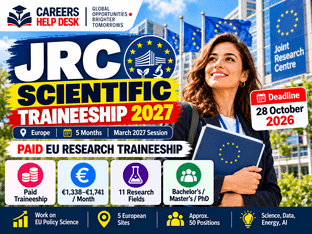
If you are already in Europe and pursuing a degree then exploring the JRC Scientific Traineeship 2027 for Paid Internship in Europ.
How Much Does the NOHA Erasmus Mundus Scholarship Pay?
The Erasmus Mundus scholarship provides:
€1,400 per month × 24 months = up to €33,600
NOHA states that the scholarship contributes toward:
- Travel
- Visa costs
- Installation costs
- Subsistence costs
The monthly amount remains fixed regardless of your nationality, country of origin or residence.
The scholarship covers the full duration of the master’s programme for eligible full-time scholarship holders.
NOHA can reduce funding if a student fails to meet the programme’s compulsory mobility requirements.
NOHA Tuition Fees for Self-Funded Students
Students without an Erasmus Mundus scholarship pay €4,000 per semester.
Across four semesters, that equals:
€4,000 × 4 = €16,000
The participation fee covers tuition and other mandatory academic costs, including enrolment, examinations, administrative support and the final diploma.
The fee also includes an insurance scheme for the study period.
It does not cover accommodation, living expenses, travel between partner universities, visas or passports.
If your priority is a fully funded European master’s rather than self-financing a €16,000 programme, see Fully Funded Scholarships in Europe 2027.
Ready to Apply for NOHA Erasmus Mundus Scholarship
The NOHA Erasmus Mundus Joint Master’s Degree in International Humanitarian Action suits applicants who can connect academic ability with a credible interest in humanitarian work. The funding reaches €33,600 over 24 months, but the competition goes beyond grades. NOHA assesses professional and research experience, humanitarian motivation, language skills, multicultural sensitivity and recommendations alongside academic performance.
If you want Erasmus Mundus funding, complete every eligibility requirement and submit your application by December 15, 2026, at 23:59 GMT. Official Programme and Application: NOHA Network, Erasmus Mundus Joint Master’s Degree in International Humanitarian Action.
Official Source: Erasmus Mundus Joint Master’s Degree Programme in International Humanitarian Action Call for Applications
If you are unclear about your profile to qualify for scholarships then explore the Scholarship Eligibility Checker.
Frequently Asked Questions (FAQs)
Is the NOHA Erasmus Mundus Scholarship fully funded?
€1,400 per month for up to 24 months provides a maximum scholarship contribution of €33,600. NOHA states that the funding contributes toward travel, visa, installation and subsistence costs.
What is the NOHA Erasmus Mundus Scholarship deadline for 2027?
December 15, 2026, at 23:59 GMT is the Erasmus Mundus scholarship application deadline for the 2027–2029 intake.
Can international students apply for NOHA?
Yes. NOHA accepts candidates for its International Humanitarian Action programme regardless of geographical origin, subject to the programme’s academic, language and application requirements.
Can final-year bachelor’s students apply for the Erasmus Mundus scholarship?
No. Erasmus Mundus scholarship candidates must have completed their undergraduate degree by the scholarship application deadline.
Do I need a separate Erasmus Mundus scholarship application?
No. NOHA states that scholarship candidates follow the joint programme application procedure and do not need additional scholarship documents.
Does NOHA require IELTS?
No, not in every case. NOHA accepts specified English qualifications and exempts certain applicants whose entire bachelor’s programme used English as the language of instruction or who qualify under its native-English-speaker rule.
Stay connected with Careers Help Desk for the latest international fellowships, scholarships, research opportunities and jobs abroad to empower your future!

0 Comments