McGill University Jobs 2026 include 586 openings in Canada across research, academic, administrative and professional roles, offering opportunities for applicants with different qualifications and experience. Based in Montréal, Quebec, McGill University is recruiting through its official Workday careers portal. Candidates interested in postdoctoral positions, research jobs, academic careers and university administration can explore current vacancies, review eligibility requirements and apply online. As of October 12, 2026, the university’s careers portal displayed 586 job listings, each with its own responsibilities, qualifications and application instructions. International applicants can also explore these opportunities, although employment eligibility and Canadian work authorization requirements depend on the individual position.
Here is what applicants should understand: The 586 openings are not exclusively postdoctoral or research positions. They cover multiple employment categories, so finding the right opportunity requires more than searching by job title. Your qualifications, relevant experience and the specific requirements of each vacancy determine where you should focus your application.
McGill University Jobs 2026: Quick Overview
| Category | Details |
|---|---|
| Host Country | Canada |
| Institution | McGill University |
| Location | Montréal, Quebec, and other locations specified in individual listings |
| Opportunity | McGill University Careers 2026 |
| Total Listings | 586 as of October 12, 2026 |
| Career Areas | Research, academic, professional and administrative positions |
| Education Level | Depends on the position |
| Salary | Refer to individual job advertisements |
| Employment Duration | Depends on the position |
| Application Deadline | Each vacancy follows its own posting details |
| Eligible Nationalities | Check individual job requirements |
| Application Method | Online through McGill Workday |
Why Consider a Career at McGill University in Canada?
McGill University is one of Canada’s established research-intensive universities. Its official Human Resources department reports that the institution employs more than 8,000 people who support teaching, research and university operations.
McGill offers employment opportunities across academic departments and professional services. Its careers portal serves applicants interested in contributing to university research, student support, administration and institutional operations.
According to McGill’s Human Resources information, employees can benefit from career development opportunities, comprehensive benefits and pension arrangements. The university also operates a Flexible Work Arrangements programme that supports eligible work-from-home and hybrid arrangements.
McGill has also received recognition as one of Montréal’s top employers for 18 consecutive years.
These benefits make the university worth exploring, but you should always check the employment conditions of the specific position rather than assume every vacancy offers the same arrangements.
What Types of Jobs Are Available at McGill University?
The careers portal covers multiple employment categories. You can search for opportunities that match your education, experience and professional interests.
1. Postdoctoral and Research Positions
Researchers interested in McGill University postdoctoral jobs in Canada can use the official portal to search for relevant appointments.
Useful search terms include:
- Postdoctoral Fellow
- Research Associate
- Research Assistant
- Research Coordinator
- Research Officer
- Research Scientist
These terms help you narrow your search. They do not confirm that every corresponding position is currently open.
For postdoctoral and research positions, pay particular attention to the required degree, research background, technical expertise and the department advertising the vacancy.
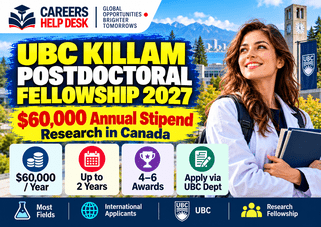
Candidates who prefer a funded Canadian postdoctoral fellowship can explore the UBC Killam Postdoctoral Fellowship 2027, which offers $60,000 annually for up to two years. Applicants must follow their proposed department’s nomination process.
2. Academic and Teaching Positions
McGill also offers a careers platform for candidates interested in university teaching and academic appointments.
Relevant job searches include faculty appointments, lecturers, teaching-related roles and academic support positions.
Academic applicants should distinguish between research-focused and teaching-focused appointments. A position that emphasizes undergraduate teaching requires different evidence from one that prioritizes independent research, publications and research programme development.
If you hold a PhD, read the responsibilities carefully before preparing your academic CV and supporting materials.
If you hold a PhD and want greater freedom to pursue your own research, consider the Branco Weiss Fellowship 2027, which provides up to CHF 600,000 over five years for eligible researchers across disciplines.
3. Administration and Professional Services
McGill’s recruitment extends beyond laboratories and classrooms.
The official job portal includes professional and administrative employment opportunities. The October 12 listings, for example, included an Access Services Advisor position and an Annual Giving Officer, Volunteer Programs position.
Other relevant search areas include:
- Human resources and finance
- Student services and academic administration
- Information technology
- Library and information services
- Project coordination and management
- Communications and institutional development
You do not necessarily need a PhD to pursue a university career. Professional roles assess qualifications and experience according to their specific responsibilities.
If you are a recent graduate without professional experience, the GreenCape Graduate Trainee Programme 2026 in South Africa offers a paid, 12-month opportunity in green economy sectors for candidates who meet its work-authorization requirements.
4. Technical and Research Support Careers
Applicants with laboratory, engineering, computing or technical backgrounds should also explore positions that support research infrastructure and university operations.
Use targeted searches that reflect your actual skills, such as laboratory operations, data analysis, technical support or research equipment management.
A technical applicant may find a stronger match in a research support position than in a conventional academic appointment.
Experienced computing researchers working with eligible U.S. institutions can also explore the NSF Expeditions in Computing 2026, which supports ambitious multidisciplinary research projects with funding of up to $15 million over seven years.
Who Can Apply for McGill University Jobs in 2026?
McGill’s recruitment platform serves applicants with different academic qualifications and professional backgrounds. Your eligibility depends on the position you select. Research appointments, academic roles and administrative jobs do not share one universal set of requirements, so you should assess each vacancy individually before applying.
Here are the main factors to check.
Academic qualifications: Match your education against the job description. Some research and academic appointments require advanced qualifications, while professional roles may accept other relevant educational backgrounds.
Professional experience: Review whether the employer expects prior university experience, research achievements, technical competencies or experience in a particular professional area.
Language requirements: Montréal operates in a multilingual environment. Check each vacancy for its specific English or French language expectations rather than assuming one language meets every role’s requirements.
International applicants: Candidates applying from outside Canada should examine the job’s eligibility conditions and any applicable Canadian work authorization requirements. A university job advertisement does not automatically guarantee visa sponsorship.
Researchers from developing countries who are exploring international alternatives can review the TWAS-FAPESP Postdoctoral Fellowship 2027 in Brazil, which supports eligible postdoctoral research within existing FAPESP-funded projects.
Salary, Benefits and Working Conditions
McGill’s official Human Resources website identifies several employee benefits, including comprehensive benefits, pension arrangements and professional development opportunities.
The university also highlights its paid time-off policies, workplace well-being initiatives and employment equity commitments.
For applicants comparing positions, the most important distinction is the specific employment category.
A fixed-term research appointment may have different compensation and employment conditions from a continuing administrative role. Likewise, academic and professional staff positions may operate under different arrangements.
Before applying, examine the individual advertisement for salary information, contract length, working hours, benefits eligibility and any workplace attendance requirements.
You can review the university’s official Employee Benefits and Flexible Work Arrangements pages for further information.
How to Apply for McGill University Jobs 2026
McGill directs external candidates to its official Workday recruitment portal. Follow these steps to identify suitable positions and complete your application.
Step 1: Open the official careers portal
Visit McGill University Workday Careers to view current job listings.
Step 2: Search by your career area
Enter relevant job titles or research-related terms. Use the available filters to narrow the results.
Step 3: Review individual job descriptions
Open the vacancy and read its responsibilities, qualifications, location and application instructions. Record the job reference number.
Step 4: Prepare your application
Tailor your CV or résumé to the vacancy. Include any additional documents the advertisement requests, such as a cover letter or research-related materials.
Step 5: Submit through Workday
Follow the application instructions on the selected listing. Check your information and required attachments before submitting.
Current McGill employees should use the university’s separate Internal Employee Careers Access.
Careers Help Desk Counter Angle: How to Make Your Application More Competitive
A university with hundreds of vacancies can appear to offer hundreds of chances. In practice, your success depends on identifying the positions where your experience closely matches the department’s needs.
1. Search by your actual skills, not only your qualification.
Many PhD graduates search exclusively for “Postdoctoral Fellow” and overlook research associate, coordinator or specialist positions.
That approach can unnecessarily narrow your options. A candidate with strong experimental design, data analysis or laboratory management experience should examine research-related professional appointments as well.
The job title matters less than the work.
2. Treat the job description as an assessment guide.
An academic CV often contains publications, projects, technical skills and previous appointments. Simply sending the same document to every department makes it harder for hiring teams to identify your relevant experience.
Read the responsibilities first. Then show evidence of the tasks you have already performed.
For example, if a position emphasizes research project coordination, explain how you managed experiments, budgets, collaborators or reporting deadlines. Do not rely entirely on your publication record.
3. Separate academic prestige from employment eligibility.
McGill’s international reputation attracts applicants from many countries. However, an excellent research background does not replace the requirements of an individual position.
Check qualifications, language expectations and work authorization conditions before investing substantial time in an application.
This matters particularly for international applicants who need to understand whether the employment arrangement fits their circumstances.
4. Do not treat the overall vacancy count as a deadline.
The 586-job figure is a snapshot, not a single recruitment competition.
The screenshot shows different posting dates for different positions. For example, the Access Services Advisor listing carries an October 1, 2026 posting date, while the Annual Giving Officer listing shows October 12, 2026.
Each vacancy operates individually. Identify suitable jobs early and follow their own closing instructions.
For researchers who prefer a dedicated fellowship with a defined funding framework, the TIES2 Fellowship Finland 2027 provides another route for eligible early-career researchers proposing unconventional scientific research.
Documents to Prepare Before Applying
Your selected McGill vacancy determines the exact application documents. However, you can prepare a basic application package before starting your search.
- An updated CV or professional résumé
- A tailored cover letter, where the vacancy requests one
- Academic qualifications and relevant professional credentials
- A concise record of your research, technical or professional achievements
- Any additional materials specifically requested in the job advertisement
Research applicants should organize their publications, projects and technical expertise so they can quickly adapt their materials to different departments.
Avoid submitting unnecessary documents. Follow the selected vacancy’s instructions, including any file format or submission requirements.
Common Application Mistakes to Avoid
Several avoidable mistakes can weaken an otherwise suitable application:
- Applying to a position without checking its minimum qualifications.
- Using an identical CV for research, teaching and administrative vacancies.
- Overlooking French or English language requirements.
- Confusing the posting date with the application deadline.
- Assuming every position offers remote work or immigration sponsorship.
- Leaving required application fields incomplete or failing to attach requested documents.
The simplest improvement is to assess each position on its own terms. A carefully targeted application usually communicates your suitability more clearly than a generic submission to multiple departments.
Explore McGill University Careers 2026
McGill University’s 586 job listings as of October 12, 2026 give researchers, academics, technical specialists and professional applicants a broad range of positions to explore in Canada. Start with your qualifications and experience. Search for relevant job titles, compare the individual requirements and prepare an application that directly addresses the position. Because vacancies follow separate recruitment timelines, check the official portal regularly and prioritize positions that closely match your background.
Official application links:
Frequently Asked Questions About McGill University Jobs 2026
How many jobs are available at McGill University in 2026?
586 job listings appeared on McGill University’s official careers portal on October 12, 2026. The total includes different employment categories, and the number changes as the university adds or closes vacancies.
Can international applicants apply for McGill University jobs?
Yes, international candidates can access McGill’s external recruitment portal. However, eligibility and Canadian work authorization requirements depend on the individual position. Check these conditions before submitting your application.
Are there postdoctoral research jobs at McGill University?
Yes, McGill offers research career opportunities, and applicants can search for postdoctoral and research-related positions through its recruitment platform. The current number of vacancies in each research category depends on the available listings.
What is the application deadline for McGill University jobs?
Each vacancy has its own application requirements and timeline. Open the specific job advertisement to check the relevant closing instructions. There is no single deadline for all 586 listings.
Do I need IELTS to apply for McGill University jobs?
No universal IELTS requirement appears in the university-wide careers information. Each position sets its own language and qualification requirements. Review the job advertisement for any required language evidence.
How do I apply for McGill University jobs online?
You can apply through McGill’s official Workday careers portal. Select a vacancy, review its requirements and follow the online application instructions.
Stay connected with Careers Help Desk for the latest international fellowships, scholarships, research opportunities and jobs abroad to empower your future!


0 Comments