The CIRES Visiting Fellows Program 2027 at the University of Colorado Boulder, USA, is accepting applications from international postdoctoral researchers and senior scientists. Postdoctoral fellows receive a starting annual salary of $70,000, a two-year research appointment, and up to $8,000 in research funding. Sabbatical fellowships lasting 3–12 months are also available for eligible mid-career and senior researchers.
The programme is hosted by the Cooperative Institute for Research in Environmental Sciences (CIRES), where selected fellows collaborate with scientists from CIRES, the University of Colorado Boulder, and NOAA laboratories. Applications close on December 21, 2026, at 11:59 PM MST. Applicants should identify and contact a suitable CIRES research sponsor before applying, as sponsor support is an important selection consideration. Researchers from outside the United States are eligible to apply, subject to the programme’s academic requirements.
CIRES Visiting Fellows Program 2027: Quick Overview
| Programme Details | Information |
|---|---|
| Fellowship name | CIRES Visiting Fellows Program |
| Host institution | University of Colorado Boulder / CIRES |
| Country | United States |
| Location | Boulder, Colorado |
| Application cycle | 2026–2027 |
| Fellowship categories | Postdoctoral and Sabbatical |
| Postdoctoral salary | $70,000 in the first year |
| Postdoctoral duration | 2 years |
| Sabbatical duration | 3–12 months |
| Research budget | Up to $8,000 |
| Application deadline | December 21, 2026, 11:59 PM MST |
What Is the CIRES Visiting Fellows Program?
The CIRES Visiting Fellows Program supports scientists who want to develop independent research while working with established researchers in environmental sciences.
The institute brings together researchers from different scientific disciplines, allowing visiting fellows to collaborate on projects involving environmental processes, climate, atmospheric science, Earth systems, and other areas connected to CIRES research.
The program has hosted more than 350 scientists from around the world over the past 50 years.
There are two fellowship categories:
- Postdoctoral Visiting Fellowships: For early-career researchers who have recently completed, or are close to completing, a relevant PhD.
- Sabbatical Fellowships: For established scientists who hold appointments at academic or research institutions and wish to undertake collaborative research at CIRES.
Both categories require applicants to identify a suitable CIRES Fellow or Senior Research Scientist who can support their proposed research.
Funding and Benefits
The financial support depends on whether you apply for a postdoctoral or sabbatical fellowship.
1. Postdoctoral Visiting Fellowship
Postdoctoral fellows receive:
- A two-year research appointment.
- An annual salary of $70,000 during the first year.
- A second-year salary increase in line with applicable campus merit or other base-building compensation increases, depending on the appointment start date.
- A research budget of up to $8,000.
- A modest individual relocation stipend.
- A laptop provided separately from the research budget.
The relocation stipend does not cover family relocation expenses.
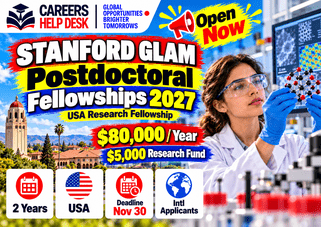
Researchers exploring other US postdoctoral opportunities may also consider the Stanford GLAM Postdoctoral Fellowships 2027–2029, which offer an initial annual salary of $80,000 and research/travel funding. Applications close on November 30, 2026, and require a faculty host nomination.
2. Sabbatical Visiting Fellowship
Sabbatical fellows may receive:
- A fellowship lasting between 3 and 12 months.
- Reimbursement of eligible lodging expenses up to $2,500 per month.
- Up to $8,000 for research-related travel, materials, and supplies.
- A laptop provided separately from the research budget.
- The option to use part of the research travel budget for eligible travel to Boulder and the return journey.
The research budget is intended for expenses associated with the proposed project rather than personal living costs. CIRES identifies research-related travel, conference registration, abstract fees, materials, and supplies as typical eligible expenses. Travel is generally the most common use of this funding.
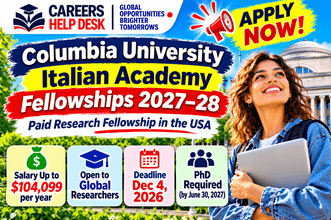
Established researchers looking for other opportunities in the United States can explore the Columbia University Italian Academy Fellowships 2027–28. These fellowships welcome eligible postdoctoral, mid-career, and senior scholars across multiple disciplines, with applications closing December 4, 2026.
Eligibility Criteria
Postdoctoral Fellowship Eligibility
Applicants must meet the following requirements:
- Have completed their PhD no more than four years before the application date. Exceptions may be considered for caregiving responsibilities or other exceptional circumstances.
- Hold a PhD in a discipline related to CIRES research.
- Complete the PhD defense and obtain approval of all thesis revisions before the fellowship begins.
- Provide proof of the PhD degree before the official appointment start date.
- Not be a current or former University of Colorado Boulder graduate student or postdoctoral researcher.
- Not be a current or former CIRES Visiting Fellow.
Researchers who are still completing their PhD may therefore be eligible to apply, provided they meet the degree-completion requirements before starting.
Sabbatical Fellowship Eligibility
Sabbatical applicants must:
- Hold an appointment at an academic or research institution.
- Be at the mid-career or senior-career stage.
- Not have held specified University of Colorado Boulder affiliations within the 10 years preceding the application deadline, including appointments as a graduate student, postdoc, researcher, research affiliate, sabbatical visitor, or faculty member.
- Spend at least three months in residence at CIRES or conducting related field research.
Vacation and conference attendance do not count toward the three-month minimum.
Priority is given to candidates affiliated with institutions outside the greater Boulder scientific community.
Can International Researchers Apply for CIRES Visiting Fellowships?
Yes. International applicants are eligible to apply for the CIRES Visiting Fellows Program 2027. There is no separate application process for candidates from outside the United States.
According to the official CIRES FAQ, applicants do not need to take any special steps during the application process because of their international status. If selected, the institute’s Human Resources department will assist with the necessary visa arrangements.
Applicants with specific visa questions can contact CIRES International Employee Specialist Janet Garcia at janet.garcia@colorado.edu.
Required Application Documents
The application materials differ slightly between the two fellowship categories.
| Document | Postdoctoral | Sabbatical |
|---|---|---|
| CV using two-page NSF template | Required | Required |
| Academic transcripts | Required | Not listed |
| Cover letter | 1–2 pages | Maximum 2 pages |
| Research proposal | Maximum 3 pages | Maximum 3 pages |
| CIRES sponsor identification | Required | Required, 1–3 sponsors |
| Recommendation contacts | 3 referees | Not listed |
| Expected start date | Required | Required |
The research proposal must use 12-point font, although figure captions may use 10-point font. Figures count toward the three-page limit, while references do not.
What Should the Research Proposal Include?
Your proposal should clearly explain:
- The research problem and why it matters.
- What is new about the proposed work.
- Your research questions and methodology.
- Expected scientific outcomes and a realistic timeline.
- Why CIRES is an appropriate place to conduct the project.
- How the work connects with the expertise of your proposed CIRES sponsor.
The proposal will be reviewed by an interdisciplinary scientific committee. Avoid assuming that every reviewer has specialist knowledge of your research area.
What Makes a Strong CIRES Research Proposal?
CIRES recommends a clearly defined research problem, a testable hypothesis, and a realistic plan for achieving results within the fellowship period.
For postdoctoral applicants, this means your proposed research should be achievable within two years. Avoid presenting an overly ambitious project without explaining how its major objectives can be completed.
The review committee includes scientists from different disciplines, so limit technical jargon and explain specialized concepts when necessary.
Your proposal should also explain how the research supports the scientific objectives of CIRES, NOAA, or the Visiting Fellows Program. Where relevant, identify opportunities for new research partnerships.
A proposal that clearly explains what you will investigate, how you will investigate it, and why CIRES is the appropriate place to conduct the work will address several of the institute’s stated review considerations.
If you’re preparing a research proposal for the CIRES fellowship, our guide on how to write a PhD research proposal explains how to develop research questions, choose appropriate methods, and present a realistic research timeline. Adapt the guidance to CIRES’s three-page proposal limit.
Careers Help Desk Counter Angle: Your CIRES Sponsor Could Be the Most Important Part of Your Application
One requirement deserves particular attention: CIRES strongly encourages applicants to identify and contact a potential research sponsor before applying.
According to the programme, successful proposals are typically developed in collaboration with CIRES researchers. Applications without support from a current CIRES Fellow or Senior Research Scientist are unlikely to succeed.
How to Find and Contact a Potential CIRES Sponsor
Start by reviewing the profiles and publications of CIRES Fellows and Senior Research Scientists. Look for researchers whose work connects with your expertise and the project you want to propose.
When contacting someone, explain:
- Your current research area and relevant experience.
- The specific research interests you share.
- The problem you would like to investigate during the fellowship.
- Why collaborating with that researcher would benefit the project.
Avoid sending the same generic email to multiple researchers. CIRES specifically recommends demonstrating that you understand the potential sponsor’s research.
If you receive no response, you can send a polite follow-up after one or two weeks. Researchers may be busy, and an unanswered first email does not necessarily indicate a lack of interest.
You can identify up to three CIRES Fellows or Senior Research Scientists as sponsors. If someone you want to collaborate with is not eligible to be a formal sponsor, they may still be able to work with an eligible sponsor internally.
Not sure how to approach a potential CIRES research sponsor? Our guide on how to email a professor for PhD and research opportunities includes practical email examples and follow-up advice. For this fellowship, adapt your message to emphasize your postdoctoral research experience and proposed collaboration.
Should Your Sponsor Write Your Research Proposal?
No. A potential sponsor may provide feedback and help you refine the research direction, but CIRES expects the proposal to represent your own research ideas and work.
This distinction matters. Your application should demonstrate independent scientific thinking while explaining the benefits of collaborating with researchers at CIRES.
Before submitting, ask someone outside your research specialty to read your proposal. CIRES uses an interdisciplinary review committee, so a technically strong application still needs to be understandable to scientists from other fields.
How Are CIRES Visiting Fellows Selected?
Applications are reviewed by a committee of CIRES Fellows.
The evaluation considers:
- Quality of previous research.
- Potential contributions to environmental science, including relevant publications, awards, and fellowships.
- Opportunities to develop new scientific partnerships that benefit research, CIRES, or NOAA.
- Support from the proposed CIRES Fellow or Senior Research Scientist.
- Quality, originality, feasibility, and expected outcomes of the research proposal.
For postdoctoral applicants, CIRES also places importance on how the fellowship would support their development as researchers, including new methods and skills.
The cover letter should therefore explain what you hope to learn during the fellowship and how those experiences connect with your longer-term research goals.
Your CIRES cover letter should explain your research background, scientific interests, and how the fellowship would contribute to your professional development. For help organizing these ideas, see our guide on writing a statement of purpose for Master’s and PhD applications. The guide provides useful examples of academic motivation and research fit, although you should follow CIRES’s specific cover letter requirements.
How to Apply for the CIRES Visiting Fellows Program 2027
Step 1: Check your eligibility. Review the conditions for the postdoctoral or sabbatical category before preparing your application.
CIRES Visiting Fellowship for postdoctorate and sabbatical researchers 2027 Guidelines
Step 2: Find a potential sponsor. Identify a current CIRES Fellow or Senior Research Scientist whose work aligns with your proposed research.
Step 3: Discuss your research proposal. Contact the researcher early and explain the proposed project and potential collaboration.
Step 4: Prepare the required documents. Complete your CV, cover letter, research proposal, and any additional materials required for your category.
Step 4: Arrange three recommendation letters. Postdoctoral applicants must enter the contact details of three referees into the online application system. The system automatically emails each referee, and you can send these requests before completing your application.
Choose researchers or supervisors who know your work and can provide specific examples of your research ability, independence, problem-solving skills, and collaboration. Recommendation letters are due one week after the December 21, 2026 application deadline. All three letters must be received, or the application will be considered incomplete. CIRES sponsors cannot write recommendation letters for your application.
Step 5: Submit the online application. Use the official application portal and ensure all required materials and recommendation letters are received before the deadline.
Apply for the CIRES Visiting Fellows Program 2027
Important Dates
| Event | Date |
|---|---|
| Applications open | October 19, 2026 |
| Information session | November 2, 2026, 10–11 AM MST |
| Application deadline | December 21, 2026, 11:59 PM MST |
| Fellowship start | Within 10 months of offer acceptance |
| Recommendation letters | One week after application deadline |
| Selection decisions | Spring 2027 |
Fellowship deferrals are not permitted.
Common Application Mistakes to Avoid
A technically strong research proposal may still face difficulties if it does not meet the program’s specific requirements.
Pay particular attention to these issues:
- Contacting sponsors too late: CIRES expects applicants to engage with potential sponsors before submitting their applications.
- Writing an overly specialized proposal: The interdisciplinary review committee needs to understand the research question and scientific contribution.
- Ignoring the CIRES Strategic Plan: Applicants should explain how their proposed work connects with CIRES research priorities and collaborative environment.
- Submitting a proposal without a realistic timeline: The review process places value on achievable research outcomes.
- Missing recommendation letters: Postdoctoral applicants are responsible for ensuring their referees submit letters on time.
You can review the institute’s priorities in the CIRES Strategic Plan 2022–2027.
Ready to Apply for Visiting Fellowship in the United States
The CIRES Visiting Fellows Program 2027 offers postdoctoral researchers a two-year appointment with a $70,000 starting annual salary and research funding, while providing established scientists with opportunities for shorter collaborative research visits in Boulder, Colorado. Applicants should focus first on finding a suitable CIRES research sponsor and developing a feasible, collaborative proposal. The deadline is December 21, 2026, at 11:59 PM MST.
Official Sources:
Frequently Asked Questions (FAQs)
Can international researchers apply for the CIRES Visiting Fellows Program?
Yes. CIRES accepts applications from international researchers. No separate application procedure is required, and the institute’s Human Resources department assists selected applicants with necessary visa arrangements.
Can I apply if I have not completed my PhD?
Yes. Applicants expecting to complete their PhD in the coming months may apply. However, they must complete their PhD defense and obtain approval of all required thesis revisions before beginning the postdoctoral appointment.
Do I need to contact a CIRES sponsor before applying?
CIRES strongly recommends contacting a potential sponsor early. Successful proposals are generally developed with a CIRES Fellow or Senior Research Scientist, and applications without sponsor support are unlikely to succeed. Applicants may identify up to three eligible sponsors.
What is the deadline for CIRES recommendation letters?
The main application deadline is December 21, 2026. Postdoctoral recommendation letters are due one week later. All three letters must be received for the application to be considered complete.
Do I need official academic transcripts?
No. Unofficial transcripts are acceptable for the initial postdoctoral application. Sabbatical fellowship applicants are not required to submit transcripts.
When will selected fellows be notified?
According to the official CIRES FAQ, fellowship decisions are normally made in spring. The FAQ states that selected fellows must begin within nine months of notification, while the main programme conditions give a 10-month period after offer acceptance. Applicants should confirm their individual appointment deadline with CIRES.
Stay connected with Careers Help Desk for the latest international fellowships, scholarships, research opportunities and jobs abroad to empower your future!


0 Comments