How Does Space Change the Human Body? NASA’s Crew-12 Mission Will Find Out
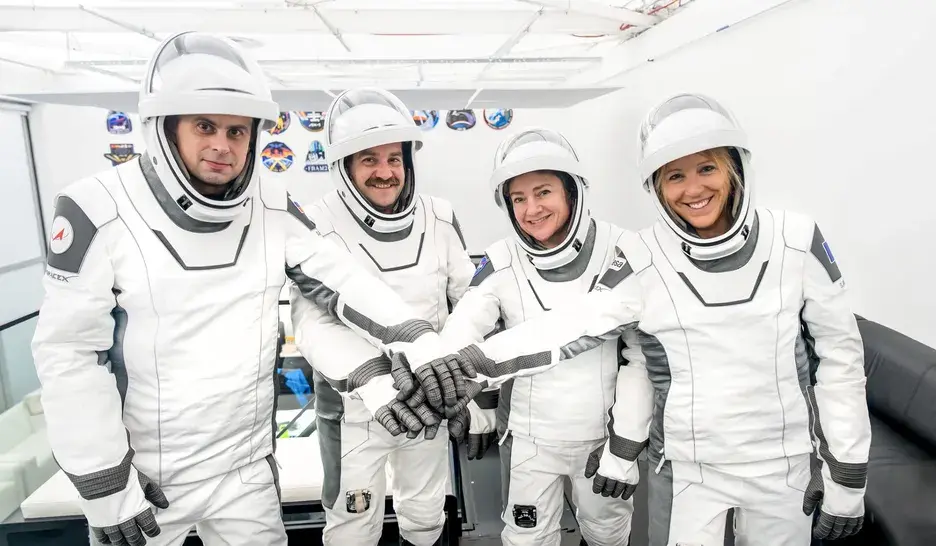
Space exploration is entering a new phase where understanding the human body in space is just as critical as advancing rocket technology. NASA is preparing its SpaceX Crew-12 mission to study how astronauts adapt to microgravity, a key step for future missions to the Moon and Mars. From blood flow changes to vision risks, space is pushing the human body in ways scientists are only beginning to understand.
What NASA’s Crew-12 Mission Will Study in Space
The upcoming Crew-12 mission, launched in partnership with SpaceX, will send astronauts to the International Space Station for a long-duration scientific expedition.
During the mission, astronauts will participate in advanced biomedical experiments designed to analyze microgravity effects on astronaut health, including circulation, brain function, and physical coordination.
One of the central investigations, known as Venous Flow, focuses on how blood moves in space. In microgravity, fluids shift toward the upper body and head, which may increase the risk of blood clots—a serious concern for long-duration missions.
To gather accurate data, astronauts will:
- Perform ultrasound scans on their own blood vessels
- Collect blood samples during the mission
- Undergo MRI scans and medical testing before and after spaceflight
In parallel, another study called Manual Piloting will test astronauts’ ability to control spacecraft during simulated Moon landings. These simulations target the lunar South Pole, a key destination for future missions under the Artemis Program.
Researchers are particularly interested in how astronauts manage disorientation when transitioning between different gravity environments, such as moving from microgravity to lunar gravity.
Why It Matters
Understanding how the human body adapts to space microgravity is essential for the future of human spaceflight.
Long-duration missions—especially those targeting Mars—could expose astronauts to months or even years in space. Without proper preparation, risks such as:
- Blood clots and circulation issues
- Vision impairment linked to spaceflight-associated neuro-ocular syndrome (SANS)
- Reduced cognitive and motor performance
could affect both crew safety and mission success.
For students, researchers, and professionals in aerospace, medicine, and life sciences, this mission highlights a rapidly growing field where biology meets space technology.
Deeper Insight / Context
The Crew-12 experiments are part of NASA’s Human Research Program, which focuses on enabling safe and sustainable human space exploration.
One important area of study involves SANS, a condition that affects astronauts’ vision due to fluid shifts in microgravity. Scientists are testing whether a daily vitamin B supplement can help reduce these symptoms—offering a potential low-cost solution to a complex space health issue.
Meanwhile, the Manual Piloting study reflects a critical operational reality: although future spacecraft landings will be largely automated, astronauts must be ready to take control if needed.
This becomes especially important during landings, where disorientation caused by gravity transitions can impact decision-making and performance.
Additionally, post-mission studies will examine physical stress and minor injuries experienced during landing. These insights will help improve spacecraft design and enhance crew safety during re-entry.
What Comes Next
The findings from the Crew-12 mission will directly support future exploration efforts, particularly under NASA’s Artemis program and long-term plans for Mars missions.
Looking ahead, researchers aim to:
- Improve astronaut training for gravity transitions
- Develop countermeasures for blood clots and vision changes
- Enhance spacecraft safety and landing systems
- Strengthen human performance during long-duration space missions
As space exploration expands beyond low Earth orbit, understanding human adaptation to microgravity will be essential for building a sustainable presence on the Moon, Mars, and beyond.
News Source: NASA’s SpaceX Crew-12 to Study Adaptation to Altered Gravity


0 Comments